Showing posts with label Morgan. Show all posts

Monday, January 14, 2019

Part 12: Pandora's Box...Federal Trade Commission Act of 1914...The True Federal Reserve Story....Rockefeller,Standard Oil,and World Monopolies

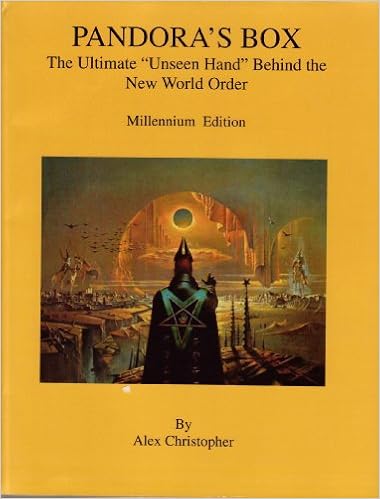
Continuing with Christopher Alex's Pandora's Box with just a short word on the Federal Trade Commission.There are six blank pages,not sure if it was text,pics,or charts.Like I said in the beginning the file not the best.
41
FEDERAL TRADE 
COMMISSION ACT OF 1914 
The Federal Trade Commission Act, passed September 26, 1914. The Sixty-Third Congress Session II Chapter 311, states in simple terms that it was to establish a five member commission to keep an eye on all big corporation (except banks and common carrier, railroads) engaged in interstate or foreign trade. It was required to publish violations and abuses and enforce the laws against unfair competition. 

The Clayton Antitrust Act, 1914, was framed to help the government further close in on the trusts. It listed in detail all the practices condemned by the courts: especially it forbade rebates, secret agreements, price privileges and interlocking directorates between banks, railroads, coal companies, etc.. It said that the labor of a human being is not a commodity and exempted from anti-trust laws all nonprofit making labor and farm groups. 

This information is meant to show that the government is aware of the monopolies of the banks and railroad that was owned by the Payseur family and is saying that we must keep and eye on everything else except these because we can't do anything about the banks and railroads.

42
THE TRUE FEDERAL RESERVE STORY 
Many of you have read elements of history recounted by Ralph Epperson, Eustace Mullins and Linsey Williams, but what you must realize is that none of these authors knew the information behind the events they describe; as a result, their work amounts to superficial coverage at best. You are advised to get a good grip on your armchair, because you are about to see in print, for the first time, information about the Federal Reserve that has never seen the light of day. 

In 1893 a panic, which was engineered by the Railroad Bankers, was in progress. The gold reserve in the U. S. Treasury held only $80 million, far too little for the United States to go on redeeming currency in gold. President Cleveland called a special session of Congress in Aug. 1893. To repeal the Silver Purchase Act that was depleting the reserve. He was hotly opposed by the silver contingent of his own party. The Act was repealed, but no legislation was made to protect the reserve in any other way. 

People began to hoard gold. Business' failed and banks crashed everywhere. National bank deposits fell $378 million. The silver dollar dropped from $.67 to $.60 in value; the western silver mines shut down. By winter (1893-94) everything was worse. Thousands were jobless: hundreds starved. Coxey's Army, a spectacular horde of the unemployed, marched to Washington to plead redress. They arrived in front of the White House May 1, 1894, but all the government could do was arrest them for walking on the grass! 

Workers in the Pullman Car Co., Chicago, struck in protest against cut wages. The strike spread to 27 states and involved 23 railroads. Railroad property, cars and buildings, were burned, trains were stopped, the mails obstructed. True history has probably been covered up. The people of this era possibly knew who was behind the control of money and were rebelling. Gov. Altgeld of Illinois, who sympathized with the strikers, would do nothing. But President Cleveland sent Federal troops to quell the agitation and keep the mail moving. The U.S. Supreme Court, by injunction, forbade interference with the movement of trains. There was bloodshed and war between the troops and the strikers. Peace was restored by the end of July 1894. But Cleveland's interference cost him the support of organized labor and its sympathizers. 

The whole 1893-94 panic and everything was planned so that the Payseur family, acting on behalf of the Virginia Company, could at last take total control of every railroad and railroad banking concern in this county. Remember the family held the financial notes for construction of the railroads, rails, rolling stock etc. They had taken the congressionally granted railroad land grant patents as collateral for the debt the railroad company owed the Payseur banks of New York for building the railroads. By orchestrating a financial crash in this county the railroads could not pay their notes and all railroad companies were seized by the banks in foreclosure. The Payseurs became the absolute owner and then they turned around and J. P. Morgan. L. C Payseurs' head trustee, created a plan to lease all the railroad companies out to operating companies in the form of the Southern Railroad Lease of 1894. 

Just to refresh your memory, as you already have discovered in earlier chapters, the railroad owns most every odd section of land in the United States and bought many even sections of land too. Along with this, they got the mineral rights also and the list goes on. 

This means that the landlord, Lewis Cass Payseur, owned all of the minerals in the ground everywhere. He also had railroad land and other claims, including gold and silver deposits. The family already had a federal monopoly for the control of railroads and banks, and had the desire to make the United States dollar the strongest form of money in the world by continuing to back all the currency in the United States with gold and silver all of which he owned, anyway. 

This family has, even to this day, a way of creating companies years in advance and then getting laws written to prevent anyone else from infringing on their monopoly. 

In 1894. a seemingly inconspicuous company was formed in North Carolina; it was incorporated, The North Carolina Gold Company, a body politic and corporation, this document is included in this chapter. Which means that it is a private company and is owned by an individual person or persons. In this case a person. 

This little company was owned by a railroad by the name of The Charleston, Cincinnati and Chicago Railroad. Which was also the owner of some thirty-six banking houses. The Charleston, Cincinnati and Chicago Railroad is a wholly owned subsidiary of the Lancaster and Chester Railroad Company. 

A secret meeting took place in November of 1910, in a little tucked away place by the name of Jekyll Island in Georgia at a hunt club propertied to have been owned by none other than J.P. Morgan. Infact, it was a private club owned by the railroad owner Lewis Cass Payseur, who had a passion for hunting, especially duck hunting. Some of the people that attended were A. Piatt, Frank Vanderlip, Henry P. Davison, Charles D. Norton, Benjamin Strong, Paul Warburg and Nelson Aldrich. You will notice that there is no mention of a Rothschild in this list, because at that time the Rothschilds were not involved with the Federal Reserve plan; it was not until sometime later that the Rothschilds became involved with it and only then because of the death of Lewis Cass Payseur in 1938. and the subsequent embezzlement by the Rothschild cousins-the Leroy Springs family descendants. 

It was only natural that J. P. Morgan would be pushing the passage of the Federal Reserve Act. because he was the main trustee for all of the Payseur companies that had been placed into trust with Morgan. The other men that were involved with the Jekyll Island trip were all life estate trustees for the Payseur family dynasty. Remember that the Payseurs had a monopoly on banking in America, which meant all of them fell under their control in some manner. 

Congressman Lindberg, testifying before the Committee on Rules, December 15, 1911, after the Aldrich plan to put the Federal Reserve into place had been introduced in Congress, said: "Our financial system is a false one and a huge burden on the people. I have alleged that there is a Money Trust. The Aldrich plan is a scheme plainly in the interest of the Trust. Why does the Money Trust press so hard for the Aldrich Plan now, before the people know what the money trust has been doing?" 

Lindbergh was right. It was to become the largest money trust ever. It became another part of the secret hidden trust that is part of the power control in the world, which goes back to the original Virginia Company and is a sibling of the Federal Reserve of England. [YES! DC]

The Federal Reserve Bank as it is known today is one of the banks owned by the the Charleston, Cincinnati and Chicago Railroad. The Fed is comprised of 1503 congressional districts and 364 of the referenced Fortune-500 companies owned by the Payseur monster that been leased out on a 99 year lease soon to be up on the dates of June 17, 1993 and December 31, 1993. 

If, by some wild stroke of luck, the people wake up in time to take the power back or we have new tenants lease all of this and take the control away from the tyrants that are now in control, things might start to change. There are no promises being made for a brighter future. The tyrants that control the Fed and the other trust companies once controlled by J. P. Morgan are very powerful. 

What I am telling you here is not hard to see if you only open your eyes and ears and start putting this giant puzzle together; it is the truth given to you for the very first time, and can be proven with court house and federal documents and not by the half-baked ideas by those that only read the newspapers and history books that have and are written by the ones that have been in control for a very long time. 

The enormous national debit load that this country is laboring under was created out of nothing for something that is nothing. The Federal Reserve charges the United States interest on the paper money, and their form of banking system that is almost exclusive to the federal reserve bank. 

It is called a, "Reg. "Y" Instrument" that are almost extent now, that is why the New York banks, (that are railroads), which were grandfathered into that system have a 15 to 1 ratio in banking it is called fractional reserve banking creating something out of nothing. The banks that operate on the "Reg. Y" principle can write checks fifteen times over for every' dollar they are holding. That is power. And we have to pay interest on the excess money that the fed prints to cover the fifteen dollars that are created from every one dollar that is really held by the bank. 
Image result for Crandall Close Bowles WIKIPEDIA
Today there is supposed to be a man by the name of Greenspan directing the affairs of the Federal Reserve, but this is not the truth of the matter. The person that controls the Federal Reserve and the rest of the world is the decedent of Leroy Springs, his great-great granddaughter Crandall Close Bowles, who sits as director in the Federal Reserve building in Charlotte, North Carolina.

The Involvement of the Payseur and Beatty families in the printing of the Federal Reserve notes 
Let us review some past history of the Payseur and Beatty families. The year is 1757; a paper manufacturer by the name of Beatty invented a special woven type of paper called "Chameleon Paper". The paper was extremely durable, readily accepted special magnetic inks, and contained a unique mix of almost microscopic fibers, most white, some red, some green. 

The Beatty paper mill was on the Yadkin River in North Carolina still produces this special paper today, and it is the sole supplier, under great secrecy, to the Federal Reserve printing mills. 

It is the paper from which the currency of the United States of America is made. In 1913, the Federal Reserve Bank, caused legislation to be enacted to the effect that it would be thereafter illegal to even attempt to make a paper like it. The Payseur family bought this paper mill after the Civil War because the Beatty's lost everything for acts of treason. 

The Payseurs in later years found a use for this very special paper, and in fact one of the Payseur family elders told an interesting story one day about how when she was a young girl and her family was living in Washington D.C. with her grandfather L.C. Payseur, there was a special section in the house that she would visit that had been converted into a printing company, which her uncle operated, to print the money that was to soon come into use in the United States; the year was around 1909, and the inscription on the money said, "Federal Reserve Note". It is unknown when or if those bills were ever put into circulation. 

The Federal Reserve has to do with the covenant of the Virginia Company 
For the grants of the land known as the United States the families granted forever that a certain percent of their gains in the United States would be given to the British Crown (Lords of London) The Huguenots covenant with Queen Anne was that half their gains would be given to the British Crown, and they made this agreement in exchange for her arranging, on board her ships, transportation for them to the United States and also she hid them from Napoleon's armies. 

The people of this country have never become independent of England. The wars we fought did not gain us anything and the real truth of why the people went to war has been covered up like all other conspiracies. 

They received from the Crown land grants, which were in free and common soccage, (which was only another way of saying lease not ownership), in the British Colonies. You have to remember that the King of England gave nor granted anything to we the people. He demanded to be paid one half of all mineral wealth we extracted from his lands. Every time we thought we gained freedom from England the King came back with a new trick, like the Internal Revenue System and the Social Security which will be explained in detail in Pandora's Box II. 

Therefore in the copy of the original incorporation papers of the Federal Reserve proves the covenant is still valid with Edmond Dempsey of Boston representing Lords of London receiving 25 shares and George Bashore (which was a Payseur) receiving 25 shares and the balance which was 199950 sold to the public elected by Nathaniel Wilson of Washington, DC to establish a common currency between Europe (England) and the United States, known as the Gold Standard. July 15, 1893. 

On the next four pages you will find the original incorporation papers of the beginning corporation that was to someday be known as the Federal Reserve.[4 blank pages DC]

43 
JOHN D. ROCKEFELLER, 
STANDARD OIL AND 
WORLD MONOPOLIES 
Everyone has for many years been lead to believe that the Rockefellers were the people that owned and founded the Standard Oil Company and that the Rockefellers were the owners of banks and vast fortunes even from the mid-eighteen hundreds. 

The Rockefellers really were part of an elite group of men that became the front men for one family that really owned the wealth of this country. Because of the vastness of this empire the family had to have key people to head up the large corporation. 

They were put in controlling position of these companies and were made to look like they were the owners when in reality they were only the 'TRUSTEES', of these companies. John D. Rockefeller, a Trustee for what is now known as Exxon Corporation (formerly Standard Oil of New Jersey), first became interested in oil in 1863 when he was sent to Pennsylvania by a group of Cleveland, Ohio businessmen to investigate oil operations. 

At that time he was not impressed with, the producing end of the business, but he did see a future for the refining and marketing side. And on this premise he and his associates developed their holdings until Standard Oil Company was incorporated in 1877. 

These people were convinced that small local firms could be bought out because then they could not survive in the highly competitive oil business. Small businesses were bought out and they all became part of the huge Standard Oil Trust in 1882. 

Decisions were made bv an executive committee with Rockefeller as head. Standard Oil Company was incorporated in New Jersey on August 15, 1882, by the Standard Oil Trust. 

This oil company really owns all oil companies everywhere and all their subsidiaries. This oil company is owned by a little railroad line in North Carolina and that little railroad line was merged into the 1906 Southern Railway Merger that J. P. Morgan was so famous for. 

All of this was owned by one man by the name of Louis Cass Payseur. The true ownership has been hidden from the public eye because the family did not want to be known and also to avoid antitrust laws. So it was set up with trustees to operate the company. 

The first Standard Oil marketing operation outside the United States was the formation of Anglo-American Oil Company. Ltd. in 1888. Next came the purchase of Deutsch-Amerikanische Petroleum-Gesellschaft in 1890, resident agents were established in the Far East by 1893. By 1895 the company had built up an ocean going fleet of ships (which were the extension of the railroad around the world) to supply this growing foreign trade. Its first tanker was built in 1886. 

The increasing need for crude oil forced the company to engage in larger production of crude oil. The company had production operations in Pennsylvania. Ohio and Indiana by 1889. In the late 1890's and early 1900's new oil was discovered to the West, so the company engaged in the search for oil in Illinois. Kansas. Oklahoma. Louisiana. Texas, and California. 

These discoveries required that the manpower be increased and new subsidiaries be formed and a new TRUSTEE had to be appointed to head these companies in oil rich western America. Names like Sinclair, Getty, Kerr-McGee, Phillips. Champlin just to name a few. Are you beginning to get the big picture. All this can be backed up with legal courthouse documents. 

Accompanying the extension of producing activities was the building of pipelines. The company had gathered lines from its earliest days in the production phase of the oil business, but in 1879 Tidewater Pipe Company proved the feasibility of a cross county pipeline. 

By 1908 Standard had transcontinental pipelines started in the United States. By 1911 its 10,000 miles of trunk lines extended from Baton Rouge. Louisiana northwest through Oklahoma and Kansas, northeast to Indiana and on the Eastern Seaboard. 

The company's leading refineries in 1911 were located at Bayonne, Jersey City and Bayway, New Jersey, Baltimore. Maryland and Parkersburg, West Virginia. 

Now ask yourself one simple little question and it is that, why, way back in the 1870's was there such a need for oil. it wasn't until the 1890's that automobiles started to appear and not until around 1910 did they really start becoming popular. Why the push for oil? 

The answer is the railroads and shipping fleets that were growing so fast were all owned by this family. It just makes good sense to own the companies that produce the goods that supply another facet of your business empire. All part of transportation and communication. 

Some of the other names that you can connect to Standard Oil are Esso. The Carter oil Company formed in 1893 to produce oil in West Virginia. International Petroleum Company was established in 1917 to operate newly acquired properties in Peru. Then came Humble Oil refining Company of Texas. Just to make note of some other names it does business as is Amoco, Sunoco, Vacuum Oil etc. and the list goes on and on. 

A policy set in the 1920's showed that Standard intended to continue interest in foreign production. It began operation in the Middle East in 1928 and investigated oil prospects in Mexico and Colombia. The country of Colombia was an important oil source for the company by 1926. 

The unbalance in transportation facilities was corrected by creating a new United States flag fleet operating directly by the parent company. West India Oil Refining Company was acquired in 1922. Creole Petroleum Company were acquired in 1928, and in the same year an interest in Turkish (now Iraq) Petroleum company. 

To strengthen its refining position Standard bought patent rights outside Germany for a new refining process called hydrogenation. Its foreign marketing strength was increased by 1930 when Standard once again came to power with Anglo-American Oil Company. In 1932 other foreign properties were added by the purchase of Lake Maracaibo, Venezuela, and a refinery at Aruba in the Netherlands West Indies. 

Lago Petroleum Corporation and Creole Petroleum Company were merged in 1944. In the same year Standard acquired direct ownership of ocean going tankers. Other marine properties of Standard Oil Company of Louisiana were acquired by Interstate Pipe Line Company. 

Standard Oil Company of New Jersey's name was changed in 1948 to Esso Standard Oil Company and under the new name continued to operate all refineries and marketing facilities. Foreign marketing facilities were strengthened in 1948 by the acquisition of Soc. ddu Naphte S. A. (Switzerland) which marketed in various Middle East countries. Foreign production was added by acquisition of a large interest in Arabian American Oil Company in 1948.

November 1, 1972, the company changed its name to Exxon corporation. The name was also adopted by the company's United States subsidiaries. 

Divisions and affiliated companies of Exxon Corporation operate in the United States and about 100 other countries. Their principal business is energy, involving exploration for and production of crude oil and natural gas, manufacturing of petroleum products and transportation and sale crude oil, natural gas and petroleum products, exploration for and mining sale of coal. Exxon Chemical Company is a major manufacturer and marketer of petrochemicals. Exxon is also engaged in exploration for and mining of minerals other than coal such as gold, silver etc. 

A list of a few of Exxon Subdivisions: 

Exxon Chemical Company
Exxon Chemicals Americas 

Exxon Coal and Minerals Company 
Exxon Company, U.S.A. Natural Gas 
Exxon Company, International 
Exxon Gas System, Inc. 
Exxon Pipeline Company 
Exxon Production Research Company 
Exxon Research and Engineering Company 
Exxon Shipping 
Esso A. G. of Germany 
Esso Austria A. G. 
Esso Brasileira De Petroleo of Brazil 
Esso Caribbean and Central America 
Esso Europe-Africa Services Incorporated 
Esso Exploration and Production Australia Incorporated 

Esso Australia Limited 
Esso Exploration and Production United Kingdom Limited 

Esso Italiana 
Esso Nederland B. V. 
Esso Norge of Norway 
Esso North Europe 
Esso Resources Canada and Imperial Oil Limited 
Esso Societe Anonyme Francaise of France 
Esso Sociedad Anonima Petrolera Argentina 
Esso Standard Oil S. A. of Bahamas 
Esso Standard Oil of Uruguay 
Esso Switzerland 
Esso Tankschiff Reederel GmbH of Germany 
Esso Transport Company, Inc. 
Esso Colombiana Limited 
Friendswood Development Company a subsidiary, of Exxon, it has become Houston, Texas biggest, developer of homes and apartments. 

Monterey Pipeline Company 
Petroleum Casualty Company 
Plantation Pipe Line Company 
Arabian American Oil company ( ARAMCO ) and Trans-Arabian Pipe Line Company Tapline a subsidiary of Aramco 

BEB Erdgas und Erdol GmbH of Germany 
Interhome Energy, Inc. 
Home Oil Company Limited 

One of the next places these oil hungry people found oil was in Russia's great Baku Field on the Caspian Sea. By 1883, a railroad had been built to the Black Sea. the Czar had invited his distant family, (heirs of the former Louis XVI, that were now in America building a Banking and Railroad Dynasty,) to come help in the growth of Russia. 

This is how it all started in Russia with what you today call the Internationalist.  

[13 blank pages,only interrupted by this text....
The following documents were all filed in a courthouse in North Carolina because it is the only courthouse along the railroad trackage for the Railroad Company that owns these oil companies. By law all legal documents have to be filed in the county courthouse of jurisdiction. DC]


44
ASSET ACQUISITION
The consolidation and merger of all the smaller railroads into the precursors of the railroad system we know today was chiefly accomplished through the cyclic fluctuation of boom time and depression which occurred, as formerly mentioned, in the 1860's, the 1870's and, most importantly, the depression of the early 1890's. 

During the process of those mergers, consolidations, buy-outs and releases etc., virtually every railroad operating company fell under the terms of prior leases and mortgages, almost all of which carried exception clauses to the effect that, if the document was a lease, that any assets purchased by the lessee were to become the property of the lessor, or, in the case of mortgages, subject to prior lien-mortgage bonds of another ancestral lessor (be that lessor a company or an individual). 

A paragraph in a classic lawsuit of the Circuit Court of South Carolina, namely 150F. 775. Lee vs. Atlantic Coast Line Railroad Company, dated December 23. 1906, states: 

"it should he borne in mind that, while all the stock of the local corporation was surrendered and canceled, nevertheless, about $1,000,000 worth of the capital stock of the Atlantic coast Line Railroad Company (or the parent company) was not canceled, but is still outstanding, thus clearly indicating that, while it was the purpose of the parties that the local corporation should cease to exist, it was also the intention that the Atlantic Coast Line Railroad Company should be the sole survivor, and as such should own and control all the property, rights and franchises which it had acquired by purchase as herein before stated, and that it was to own and possess all of the property, rights, titles and franchises thus purchased, to the same extend and in the same manner as it owned and possessed the property which it originally acquired by virtue of the charter which brought it into existence." 

The charter of the Atlantic Coast Line Railroad Company created the company as the lessee and operating company, and any assets acquired by it are to be deemed the assets of the lessor, who is also the holder of those one million dollars worth of stocks. The ownership spoken of above is only by deed of lease. 

The same goes for both the Southern Railway and Seaboard Air Line Railway companies, they too were created as lessee and operating companies. Additional Railroad Assets As previously mentioned in the section regarding the development of the towns on the railroad, the railroads did not only run trains.

NEXT
ELLIOTT SPRINGS AND HUGH WILLIAM CLOSE 


Tuesday, December 19, 2017

PART 2:THE WAR PLOTTERS OF WALL ST.

THE WAR PLOTTERS OF WALL ST.
BY CHARLES A COLLMAN

Image result for images of  JP Morgan and father
IV. 
WALL STREET'S BRITISH GOLD PLOT 
I intend to tell an amazing story of a plot engineered by London bankrupts, with whom miserable men in Wall Street have combined to ruin us their own fellow-countrymen. I shall describe how all the insidious weapons of the Money Trust are being used to further this traitorous design. 

It was nearing the end of last June, when the munition makers of Wall Street found themselves in an embarrassing, if not terrible, position. Their trade in guns, bayonets and shrapnel had swollen to enormous proportions; in fact, far beyond their initial calculations approximating $2,000,000,000. Two Billion Dollars. And suddenly their customers, the Allies England, France and Russia could no longer pay them ! 

A series of bond flotations has just failed in London Canadian, Australian and South African loans. A large war loan had just been launched in Threadneedle Street. Private cable advice's reached Wall Street, with disquieting rumors concerning the solvency of the United Kingdom. 

Then Mr. Henry P. Davison, the partner of Mr. J. Pierpont Morgan, of "Morgan, Grenfell & Co., London, " departed hastily on the swiftest steamship bound for English shores. Mr. Davison investigated the situation abroad, and returned, accompanied by a bodyguard of private detectives, to protect him from bodily harm. He made his report. 

The conditions resulting from Britain's great war loan had been found ghastly. The government had placed a minimum price of 65 on Consols, the premier security of the British Empire, to prevent their price from dropping to 40. And Consols were unsalable. 

Then the British government, driven to desperate straits, found itself obliged to scale down its great national debt, by forcing the holders of Consols to exchange them at the ratio of 75 in Consols for 50 in the new war loan. By this autocratic act Englishmen were compelled to reduce the capital of their fortunes by one-third. A man who had invested 300,000 in Consols had now a fortune of but 200,000, although his income was temporarily higher. 

Bankers who hold London 's finance in their hands were coerced and blackmailed by their own government to exchange their securities. 

Many of them were the heaviest holders of Consols, and the threat, was made that if they did not exchange, the minimum price of Consols would be lowered to 40, and they would be ruined. 

So England treats her own subjects, the holders of her best security. What will she do to the Americans who have been forced by pro-British bankers to take over already $500,000,000 of her paper ? 

And the proportion of the reserve to liabilities of the Bank of England had dropped during the week ended July 21st to 18.09% ! This reserve in July, 1914, had been 52.4% ; in July, 1913, 53.69% ; in July, 1911, 54.5%. Great Britain's credit was lost! She could send us no more gold in sufficient quantities to pay her debts to us. 

I am quoting the official figures. No man can dispute them. They are accessible to everyone, but not one of the Money Trust newspapers in New York dared to print the facts. For the Money Trust holds in its bank vaults loans on many of these dailies, or finances them, or would withdraw its immense advertising were they to offend. 

Then there came to a Wall Street banking house this private cable, which struck like a thunderbolt: "A BOLD SCHEME OF INTERNATIONAL FINANCE IN LINE WITH THE BRITISH CHANCELLOR'S HANDLING OF THE RECENT WAR LOAN IS TO BE APPLIED TO BRITAIN'S INTERNATIONAL OBLIGATIONS." 

This "bold scheme" was the inauguration of Wall Street's British gold plot. The British Chancellor of the Exchequer, who planned it, is the friend of Morgan, of "Morgan, Grenfell & Co., of London." 

England fears bankruptcy. And in this she is now using us as she used Belgium to fight her battles and deserted her. As she used France to do her fighting and now fails to aid her. As she has used Russia and Italy, and will in turn desert them. And she is using us, to ruin us. 

But England has promised to "finance" Belgium, France, Russia and Italy. True to her traditions, she has done it in this wise. She has said to the representatives of those four countries, through the Chancellor: "Gentlemen, I have no money to give you, but I shall use Morgan, my agent in Wall Street. I shall get him to force the Yankees to give you credit for your war munitions, and he and his friends will pay themselves by taking the money the Yankees have put in their banks. My financial agents shall take your agents to Wall Street, and there we will close the deal. '' 

And these financial agents are coming to us: Sir Edward Holden, Baron Reading, Sir Henry Babington Smith, and Basil B. Blackett. They bring their French dupes, Octave Homberg and Ernest Mallet. 

It is a case of "Hands Across the Sea" but this time the thieving hands are in our pockets. 

As well may be imagined, there was fear and trembling in the councils of the Money Trust bankers in Wall Street when they learned the orders the British Chancellor had issued to them through his British agent, Morgan. You see, they had expected months before that England would crush Germany, and she had done nothing of the sort. They had expected it, as the Belgian dupes had expected it, as the French dupes had expected it. 

But how were the Money Trust munition makers to be paid ? England could not pay them; France and Russia could not pay them. THEN THE MONEY TRUST BANKERS DECIDED THAT THEY MUST OBEY THE BRITISH CHANCELLOR'S INSTRUCTIONS; THAT THEY WOULD SAVE THEMSELVES BY MAKING THE AMERICAN PEOPLE PAY THEM FOR THE BAYONETS AND SHRAPNEL THEY HAD SOLD TO THE ALLIES. 

Quickly, secretly, hurriedly the members of the Money Trust began to "plant" the "paper" of England, France and Russia in their banks. And these banks, without the knowledge or consent of their American depositors, gave the money of their depositors to the members of the Money Trust. 

When Britain, France and Russia default on their securities, or scale them down, as they have done with their securities at home, the American people will lose their money. It is the same old story over again. The Money Trust has the cash. What does it care for the people ? 

We have seen that the British Chancellor's bold scheme is to be "in line with his handling of the recent war loan."

Through his handling of the war loan we have seen that Englishmen were forced to sacrifice one-third of their fortunes. What proportion of American fortunes are to be sacrificed to the British Chancellor's orders? On July 15th Dr. E. E. Pratt, Chief of the Bureau of Foreign and Domestic Commerce, before the Virginia Bankers' Association, estimated that the total loans of American money and credit to Europe, so far during the war, amounted to $500,000,000. He suggested that these loans were an "economic fallacy." I quote the following letter from one of the leading trust companies in New York:

'' We beg to state that this company is not lending its funds to any person, firm or corporation engaged in the manufacture or dealing in arms and ammunition to be used to further the interests of any of the countries now at war. 

"It is, however, impossible for us to trace the actual amounts of money loaned, and it could happen that funds loaned by this company, to one person, could in turn be loaned by him to another, and in this manner the funds might be used for the purposes above mentioned.   

"We might add, however, that we hold for investment some of the securities of the French government, and have obligated ourselves to later take over a participation in a loan to the Dominion of Canada. 

"It is the writer's opinion that you will find that all of the important financial institutions in this city own securities of this kind, on account of the safety of the investments and the profitable character of such business." 

HALF A BILLION LOANED 
We have seen then that up to July 15th $500,000,000 of the American people's money had been loaned to countries whose solvency is doubtful, if not altogether gone. And all this had been done, swiftly, secretly by the Money Trust, through its power of holding the whiplash over financial institutions, in order that it might get back its money. 

But the public had by this time become uneasy. It had made inquiries at its banks and learned the truth. Then the Money Trust adopted the methods it knows so well to use in order to disabuse the public mind of any apprehensions. The people might become alarmed, you see, and withdraw their money from the banks. So reports were carefully spread throughout the country that the finances of England, France and Russia were in excellent shape, and that they were sending us vast sums of gold. 

Accordingly, on August 10th, the Money Trust, through one of its bankers, "planted" a story with glaring headlines in the New York Times, an organ which it uses for such purposes. The story dwelt on the importance of the shipment of $100,000.000 in English gold to this country, and alleged that it had been sent to this side on a British warship commanded by Admiral Beatty. Through its syndicate news service, which has been serviceable to the Money Trust in misleading the public for the last year, the Times sent this story broadcast. 

Of course, everyone knows that British admirals skulk in British harbors for fear of the German submarine, and that the Bank of England would fear to separate itself from $100,000,000 in gold because of its low reserves. And the next morning the truth could not be concealed, since the Sub-Treasury figures could not be falsified, and' the reluctant official statement was to the effect that the shipment amounted to only about $19,000,000. But the lie had served its purpose in calming the public mind. 

On June 26th the Times had published a story that the Teutonic Allies were bankrupt, that Austria could pay only 11% of her obligations, while Germany might be able to pay 16%. This was done also to bolster up the waning British credit. 

But this was not sufficient. It was to be impressed upon the unquiet mind of the American people that England was anxious, nay eager, to send here large quantities of gold. The public had to be reassured in order that the Money Trust could take its money from the public banks with impunity. So again, on August 13th, the Money Trust " planted " the following in its organ, the Times: 

AN INFAMOUS STATEMENT 
"We don't want gold," said an international banker, who is taking an active part in negotiations with financiers in London and Paris. "The gold is of no use to us, and might better stay in London. The banks in this country have unprecedented cash reserves, which are not doing any good. What is needed is a credit arrangement, under which the money can be paid out on behalf of foreign nations." 

The subtle infamy of this statement can best be appreciated by the average American merchant who has tried to obtain credit from the Wall Street banks within the last twelve months. 

Who hides in the underbrush, clinking the coins in his neighbor's stolen purse, the while whispering: "We don't want gold. The gold is of no use?" 

I would ask this anonymous Wall Street banker why he skulks in hiding when he sends out a poisoned whisper intended to mislead the public mind? I would ask him to step out in the open and reveal himself. For you see I know this man who hides himself behind his anonymity, I have met him, and I know why he spoke those words. 

I would like to call to the attention of this anonymous banker the fact that eleven great mercantile houses went under in New York City in the last eighteen months, because his banks refused them credit. I would tell him that many of our great railroad systems went bankrupt in the same period because the Money Trust would not lend them money. 

I would ask this banker why he is so eager to give "foreign nations" the credit which he refuses to the American merchant and the American railroad man ? 

I would ask this same banker, Was it not you who "inspired" the following lines ? ' ' The amount of gold that it is proposed to send is stated by some correspondents (from London) to be as high as $250,000,000. Why, under circumstances.that at present exist, this stupendous movement of the precious metal should be insisted upon in London is incomprehensible to large New York; banks and bankers. The gold is neither desired nor required on this side of the Atlantic." (Commercial and Financial Chronicle, August 28th.) 

The bullion in the Bank of England last week was only about $335,000,000, so this statement of the financial authority of Wall Street that the English wished to send us $250,000,000 is palpably misleading. However, so work the corrupt Money Trust bankers, itching for the gold that England owes them and cannot pay them, while they befool their own countrymen in order that they may seize their countrymen's money to reimburse themselves. 

Let us learn the truth of this thing. We shall transpose ourselves across the ocean to London and learn whether London "insists on sending us $250,000,000 gold against our will." 

WE MUST KEEP OUR GOLD 
Image result for images of Sir George Paish
Sir George Paish, addressing his fellow-countrymen in the Statist, says: "No country can purchase more than its income permits, unless it is able to borrow." Again he says: "We are glad to see that steps are to be taken to mobilize our gold reserves." And he quotes the Prime Minister in the House of Commons. "It is highly important for us to keep and to increase our supply of gold. We have already given directions that all these smaller payments which are made to those in our employ, are not to be made in gold, but in the paper currency." 

We read nothing here of London's eagerness to send us gold. On the contrary, just before the departure of London's financial agents for Wall Street, there is a concerted move on the part of London 's financial spokesmen to educate the Yankees to the fact that it is their duty to extend a vast credit to England by means of the money stored in American savings banks. They say: "The amount we may need to borrow in the United States is about $500,000,000. We might arrange a $400,000,000 or $500,000,000 issue in New York and Boston, and if necessary, in other American cities. A good deal of the amount we ask for must be what Americans call savings bank investments." 

Do you see the plot progressing for the spoliation of the American people ? There is first the over-extension of credit by the Wall Street munition makers; the concealment of London's war loan fiasco; the Money Trust's realization that it has been selling goods to bankrupt countries ; then come the British Chancellor 's instructions to the Money Trust bankers; swiftly ensues the secret seizure of $500,000,000 of the public money; and the Printed Lie is used to delude the people into the belief that England sends us great stores of gold; the Hidden Voice of the anonymous banker is used to further the belief that we do not want this gold ; then comes the chorus from the financial wolves of London that we must give England credit ; now come the financial agents, hands extended, asking for only half a billion more. 

Is it not the highest duty of every banker in the land to see that these financial agents are sent back with empty hands? 

There is given here a list of seven Wall Street bankers, who possess great power and exercise wide influence. 

We see, on the one hand, that they officiate as managing directors in the great war munitions companies, such as Bethlehem Steel and Distillers' Securities and Lackawanna Steel. On the other hand, they head large banking institutions, which handle public money and sell issues of securities to the people. Again, these banking institutions they control, act as fiscal agents for the war munitions concerns, such as American Can, Crucible Steel and Railway Steel Spring.

WHAT BANNARD SAID 
Image result for images of Mr. Otto T. Bannard
The list is headed by Mr. Otto T. Bannard, President of the New York Trust Company. Mr. Bannard, about twelve days ago, was responsible for something that must have been deplored by most of his countrymen. On the eve of leaving London, he made a public statement, saying : '' Great Britain will be able easily to float a loan of $500,000,000 in this country. The President, to uphold the dignity of his position, must take drastic steps. If President Wilson says war we will all be with him the whole American people would be behind him." 

That a Wall Street banker, who takes his orders from the Money Trust, should give voice to such expressions, must render him an object of suspicion to his countrymen. Why -should he so readily bestow upon England $500,000,000 of his country's money ? And why should he so light-heartedly breathe such sentiments of war ? 

Does Mr. Bannard know what war between this country and Germany would mean? Does he realize that fathers would be torn from their families and sent to detention camps, that sons would fight for their fathers, that mobs would roam the streets, and blood would be shed in every town and city of the land? 

It is to be hoped that Mr. Bannard's fellow bankers do not echo his sentiments. They are prosperous men. Some of them earn for their stockholders sixty per cent, dividends, and at Christmas time grateful directors present them with $150,000 bonuses. In view of what their country does for them, should they not show their countrymen that Wall Street bankers in return are ready to act for their country 's good ? 

There are men in Wall Street far more powerful than these seven bankers the members of the Money Trust, who are plotting a great crime against the people. The Money Trust has already given to the Allies a credit of $500,000,000. It now purposes to give them $500,000,000 to $750,000,000 more. 

At a recent meeting of London bankers, Harold Cox, the political economist, said : ''The war will not end without England having to borrow two billion pounds.'' 

Two billion pounds that is ten billion dollars. And from whom will England borrow it ? There is only one lending country left.

Men of the Money Trust, if you lend these agents of the Allies one billion dollars, you may have to lend them ten. Then, when they default, we must go to war to save our loans. 

Men of the Money Trust, if you do this thing you will sow the wrath that reaps the whirlwind that may sweep you from your feet. The fate of men who defy the people is as well known as is human history. It would be lamentable if ever the day should come when the people would descend into Wall Street and swarm angrily about your white stone and marble palaces. I am one of those who believe that all the sins and crimes of men are expiated here on earth. Some members of the Money Trust have already committed crimes. They are already expiating them in the horror and loathing of their fellow-countrymen.

V. 
OUR BANKRUPT 
"LADY OF THE SNOWS" 
This is a story telling how the cruel British satraps of Canada have brought ruin and misery upon a once fair land. With tempting bonuses and honeyed words, they lured simple and honest men from distant countries, to hew their woods and till the soil. 

Suddenly there came an order to these satraps from London financiers, the masters of .Canada. And terror followed. Fathers were torn from wives and children and thrown into squalid prison camps, where thousands since have died. Others were forced with threats to go abroad again and fight and die for a foreign king whom they hated, and of whom others had not even heard. 

History has on its records no blacker crime than this. Three men, all of them "Colonial Knights/' are deeply concerned in these affairs. They are the Rt. Hon. Sir Robert Laird Borden, Premier of Canada; Sir Thomas Shaughnessy, born in Milwaukee, Wis., now president of the Canadian Pacific Railway, and "Major General Sir" Sam Hughes, Minister of Militia and Defense.

The Canadian Pacific Railway owns Canada, they say. It owns the Dominion's greatest railway lines, its greatest hotels, its greatest steamship companies, and its most expensive land grants. It is owned in London. Thus London financiers own Canada. 

The concern of these financiers is to fill the land with people. They wish to sell farms from the land which was stolen from the Dominion. They wish to transport the products of farm and forest over the railway that they own. And they used to boast : "The Nineteenth Century belonged to the United States. The Twentieth Century will belong to Canada.'' And where is Canada today ? 

Canada has a population of 6,200,000 people. But it will not grow. For years agencies in Ireland and England drained those countries of stalwart sons, until whole villages were depopulated. But Canada 's sons and daughters crossed the border and came to live with us. Like Mr.- James J. Hill, they despise the patronage of cheap titles, and can find no future in a land that is ruled by foreign plutocrats. 

The decline of British immigration and the reluctance of immigrants to remain in the country, induced the London financiers to seek other fields of propaganda. They extended one of their steamship lines to Austria-Hungary and began a widespread agitation in Germany, Austria and Hungary to obtain farmers and artisans from those populous lands. They offered tempting inducements, money bonuses, gifts of homesteads to be paid off in installments, and even free passage. 

How well this movement, begun in 1910, succeeded, may be seen at a glance in the following table :

Immigration to Canada 
                             1910    1914      Increase 
Austro-Hungarians  9,757   28,321    18,564 
Germans                1,533     5,537      4,004

DEPORT THEIR COUNTRYMEN 
But what was the caliber of these immigrants of German and Austro-Hungarian origin, as compared with English immigrants ? Here is another table of the deepest significance.
                                                            Rejections of Immigrants                          Deportations, after having
                                                      by Nationalities From 1902 to 1914          been admitted From 1902-1914
Germans               260                         113 
Austro-Hungarians 745                         279 
British                   1,411                   5,310 

The London workman, narrow-chested, incapable, and unruly, was rejected and deported in great numbers, for the English race has become degenerate, while the Teutonic races proved themselves of inestimable value to Canada. 

When Europe's war began, there was in Canada a heterogeneous populace, of men who had been persuaded to come to a new land by the fair promises of capitalists who hoped to profit from their labor. These people did not dream of ever returning to Europe to fight in England's war. And among them were Germans, Austrians, and Hungarians to the number of 229,147. 

But the war began, and there came a call to Canada's satrap, Borden, from his London masters: "Intern all alien enemies. Give them no protection. We must terrify the Germans." 

The servile satrap paled at these instructions, but obeyed them. He sat aside and stayed his hand. In all Canadian towns and countrysides, from British Columbia to Quebec, the Canuck ran riot and typified himself with brutal Cossack deeds. He burned houses, plundered shops, and stoned unoffending men, women and children in city streets and country roads. No one deterred him. German, Austrian and Hungarian men and women were dragged from their homes and slaughtered in the open. Native-born sons who defended foreign-born parents were slain, the daughters were brutalized by the mob. 

Then these fathers who survived were dragged to desolate detention camps, old sheds, open to winter winds and rains, flung into factory ovens, starved, and left unclad. The mortality among them has been frightful. The permanent illness worse. One-third of these men can never work for themselves again, and they had been lured into this country, remember, by the soft persuasions of the men who had done them these wrongs. And their wives and children in rags to-day still roam the streets and byways of Canadian cities, butts of the mocking mob, begging in vain for food and shelter. 

It is very painful to me to recapitulate this sad story, but the reason is manifest. These dreadful deeds were done to a QUARTER OF A MILLION TEUTONIC PEOPLES IN CANADA. If war should come to us, they would be attempted upon THIRTY MILLIONS OF TEUTONIC PEOPLES IN THE UNITED STATES. 

For that is what J. Pierpont Morgan wished when he made himself Britain's war agent. That is what his associates in the Money Trust wished, and their cringing satellites in Wall Street, who feed upon their crumbs. That is what the war-mad British bankers in Wall Street wished, and the pro-British writers with their poisoned pens. It is what Otto T. Bannard, of the New York Trust Company wished when he went to London and said that the " President must take radical steps"; it was what James Gordon Bennett wished when he cabled from his home in Paris,urging mob attacks upon men of German blood ; it is what Adolph S. Ochs wishes, when he incites race hatred in his evil sheet, ruled by the Money Trust. 

After the mob and massacre in Canada, the Canuck stopped, breathless, terrified by his own work. Factories had been ruined, farms burned down, and unemployment began to raise its grisly head. The blow was beginning to recoil upon the mob upon the capitalist. 

Shaughnessy, the ''American Knight,'' crawled cowering into the light in Winnipeg, and feebly said : ''The most vital problem confronting the government of the Dominion to-day is the immigration question'' 

And Canada 's Minister of the Interior said : '' It was perhaps to be expected that, after the strong light in which Canada has stood during the past few years, the shadow should be correspondingly dark." 

The shadow is now dark indeed. 

The blow was to recoil dreadfully upon the heads of men who had done evil thoughtlessly, incited thereto by capitalist masters. 

The dreadful fact was driven home to the plutocrats of England that English workmen, whom they had ground down to pauperism, would absolutely not go to war for them. They conferred in the Order in Council, and sent out instructions to their satraps in many lands: "Drive in the men from the Colonies, and make them fight." 

Borden, Canada's satrap, trembled, but obeyed. He called in a simple and inexperienced man, Sam Hughes, Minister of Militia, and gave him orders. The war propaganda began, born of English falsehood and fear. Canada must save England. The Germans were but knaves and cowards. They had been defeated by the Belgians. The French and Russians had invaded the German country and crushed the foe. It would be an easy task. The Canadians could march into a defeated  country triumphantly, where there would be plunder and glory galore. 

Fifty thousand young men of Canada were sent to France and Gallipoli. Sam Hughes came to New York to sail after them. And in the simple way of an ignorant countryman, he boasted on the pier: "One hundred thousand of my brave boys can conquer Germany alone." 

Then were sent away 50,000 more young men of Canada's best.

Time passed. Then came the dreadful story from Flanders not through the press, for that is censored. But truth must out in its thousand ways. It was that Canadians had gone to face brave men who were not afraid to die. And the Canadians, deserted by English regiments, retreated from the field of battle, and they left behind them, on a ridge, 2,000 Montreal Highlanders, who were unwilling to advance and unable to retreat. Nothing has ever been heard from them again. 

When the fearful news came to Ottawa, there was mourning and weeping throughout the Dominion. Sam Hughes in the meantime had returned. White-faced and pallid-lipped he stuttered: "They were heroes that's what they went over for." 

Hughes later slunk back to England. He was to be rewarded by his masters. 

But the order from London had been: "Drive in the men from the Colonies, and make them fight." The satrap, Borden, must obey. He called in his henchman, the "American Knight," Shaughnessy. The employers must be mobilized. Canada was tired of the war. The men would not enlist. But the Canadian Pacific Railway, owned by London plutocrats, must save them. 

On August 1st, this note was placed in the pay envelopes of employees of the Canadian Pacific: "Your King and country need you; we don't." Men, young enough to fight, were notified that they must enlist or quit their jobs. This was done in all companies owned by the railway, its hotels, its factories. It was done in the departments of the Dominion, and it was compelled to be done by all the large employers of labor in the cities. 

The plutocrats were forcing men to war. Irishmen, who hated England, must fight for her, or starve. In Montreal, a mob of 5,000 unmarried men who had been discharged by their employers for failing to enlist, held a meeting at which they denounced the newspapers advocating compulsory service, and they attacked newspaper offices, breaking their windows. Several days later, a soldier, bearing a recruiting placard, was mobbed in the Champ de Mars. Soldiers attacked the mob and arrested its leaders. 

The Canuck's were now turning on their masters. An ugly story had come back to Canada. It was the order of Lieutenant Colonel Taylor, Adjutant of the Fourth Division of the Third Canadian Infantry Brigade. ''During the last battle, several of the division surrendered to the enemy. It is the first and most urgent duty to shoot down every man that tries to surrender, no matter who it may be. If the group is large enough to give promise of success, artillery fire must at once be turned in that direction.'' 

And Canadian newspapers were printing their "must" stories, "All Are Heroes In Princess Pat's Regiment'' and speaking of "courage" and "fortitude" and the "spirit of determination that must win.'' 

And they are printing the same stories in Canada to-day, for the censorship is stricter there than in England. 

But now the Canadian people "know." 

They know the cost. The cost has ruined them. 

One hundred and fifty thousand men have been sent abroad by Canada. Few of them will ever return. 

A year ago, in the first flush of the war fever, artificially stimulated by the corrupt English press, the Dominion boastfully granted the highest pay ever given to soldiers, $1.10 per day. Widows and orphans were liberally provided for $22 a month for the widow, and $5 a month for each child. Annual pensions for wounded or disabled ran from $264 to $100 for the rank and file, according to the nature of the disability. So whether death came to the soldier, or he were disabled, or left widow or orphans, the $1.10 practically went on for perpetuity. 

THE RUINOUS CHARGE 
This was thoughtlessly done. It was kindly meant. But it spells ruin to Canada. It is an annual charge of $60,225,000. And this military burden upon the backs of 6,000,000 people ! 

Before the war began, Canada had a national debt of $544,391,000, and annual interest and other charges of $15,000,000. When the war began, the Dominion expended $20,000,000 in the initial equipment of her men. She made advances to finance purchases made in Canada by British, French, Russian and New Zealand and South African governments, of $25,000,000. 

When Borden interned the Teutonic farmers, who had, by their labor, enriched the Canadian Pacific Railway, a catastrophe happened to the London plutocrats and to the entire Dominion. The gross earnings of the Canadian Pacific Railway in 1914 amounted to $129,814,000. In the statement issued for 1915, these earnings had shrunk to $97,500,000, 'a loss of $32,300,000. Operating expenses were at once cut by the frightened capitalists. They cut them $22,588,000, which sum had previously been paid out in wages and expenses. The surplus of the great railway has shrunk by $9,600,000. 

But worse was to come to Canada's railways. Despite the warnings of men who knew, the Canadian government largely took over the charges and responsibilities of two of her lines, the Grand Trunk Pacific and the Canadian Northern railroads. She guaranteed the securities of both. They are not now earning their fixed charges. "The government must step in to avoid disaster" says Finance Minister White. Canada must now take over the two lines to prevent their bankruptcy. 

Bankruptcy has overtaken the timber and lumber industries of British Columbia. The great real estate boom that prevailed for years has collapsed. Canada has borrowed capital for municipal and industrial enterprises to such an extent that the annual tax in interest alone is about $140,000,000. Towns are now obliged to ask for time to meet the interest due on their bonds. Cities are threatened with bankruptcy. A receivership is announced in contemplation for the City of Montreal, the bonds of which are held by many banks in the United States. A committee has been formed to consult with the distracted satrap, Borden, to devise some means for meeting the obligations of the city. 

But the London plutocrats who own Canada have no mercy. They tried to stem the tide of the fall in demand sterling in New York, which is costing untold millions to English capital. They could not send gold from the imperiled gold reserve of the Bank of England, so they ordered their satraps to strip Canada of her gold and send it to New York. And the Dominion, staggering under her financial burdens, which she is no longer able to bear, sent the gold to New York at the behest of her masters, more than $100,000,000. 

These matters are mostly kept from the newspapers. New censorship regulations have been enforced in Canada. The publication of military, naval or financial information is prohibited, as well as criticism of the British government or her Allies. For violations, the offending papers may be seized and suppressed. 

But so many facts can no longer be concealed. Canada has refused any longer to give credit to her master's ally, Russia, for Russia, also, is bankrupt. ''We simply cannot do it,'' said a Canadian banker months ago. "Even if the government did help by issuing Dominion notes and thereby inflating bank circulation, with the evils attendant, banks cannot wisely tie up Canadian money in Russian securities'' 

Since this man spoke, the evil he feared has come over Canada, and not through the financing of Russian orders. The Canadian government has issued Dominion notes to an unprecedented extent, to an extent, indeed, that has ruined her credit and resources inflation by the reckless issue of paper currency, the stupid subterfuge that always ruins governments, such as Russia under Catherine the Great. The London market, which in past times jealously supplied all Canada's wants, is now closed to her. The Englishmen who ruled Canada are now ruined themselves, and come to us begging for alms. And now Canada has come to us. Morgan, Britain's agent, was instructed by his British employers to lend to Canada, and he obeyed in his characteristic way. He could not refuse, much as he might wish to do so, for Canada's gold had been siphoned into his vaults. Morgan lent Canada the money of the American people by forcing American banks to participate in Canadian loans. 

OUR FORCED LOANS TO CANADA 
From last December, until the end of May, American banks, at the order of the Money Trust, a member of which is the local agency of the Bank of Montreal in Wall Street, took over Canadian securities valued at $85,900,000. That value has since shrunk terribly. But since then, other loans have come in swift succession, such as $11,500,000 of Canadian Railway notes, issued by a railway that Finance Minister White cf Canada says "is facing disaster." Our Rock Island, and Missouri Pacific, and other great American lines, remember, could not obtain loans from the pro-British bankers in Wall Street to ''save them from disaster.'' But Wall Street is now British soil, dominated by Money Trust plutocrats, who make larger profits by lending the American people's money to the English than they could by lending it to the American merchant or railroad man. Finally Morgan forced Wall Street to take a $45,000,000 Canadian government loan. 

Canada has placed these loans with the Money Trust at ruinous rates of interest, as all bankrupts must do. For this is the only market in the world in which she can borrow, and we have taken 80 per cent, of her securities. Canada has now obligated herself to annual charges of more than $250,000,000. She has borrowed from us more than $150,000,000 in seven months. She has contracted debts since the war began of $527,525,000. She had a national debt before the war began of $544,300,000. Canada now owes more than $1,100,000,000. 

And all this debt is laid upon the backs of 6,000,000 bankrupt people. Every adult male in Canada owes on behalf of his town, his province or his county more than $1,000. Much of this sum represents an annual tax. None of it includes his private debts. And Canada's factories are closed, her great industries ruined, her cities filled with unemployed and bitter men. 

All the satrapies of Great Britain have been brought to a similar pass through the German submarine warfare. The Indian government announces that its budget will create a deficit of $15,000,000. England cannot help. Australia, instead of exporting, is importing 12,000,000 bushels of wheat. The Colonial governments have sent frantic pleas to Whitehall for ships to transport their frozen meats. New Zealand is prostrate. All through the United Kingdom the butcher shops are closing; prices of foodstuffs have doubled, and this has caused strikes among industrial workers that cannot be adjusted. 

And still the hysterical asseveration's come from England's public men : "The German submarine warfare has failed." 

We have taken a mortgage on Canada. She cannot pay us. Shall we foreclose that mortgage? 

The satrap, Borden, went to England for six weeks to discuss this crisis with his masters. The other day he returned, bringing with him his poor henchman, Sam Hughes, Minister of Militia. These two pitiful figures slunk to an obscure hotel in New York. With lined faces, and downcast spirits, they still spoke of "heroes" and "courage" and "fortitude" and the "spirit of determination that must win." 

This pair had sent to death and disaster more than 100,000 of their countrymen at the behest of cruel masters. They had heaped upon their country a new and crushing debt of more than half a billion. They put an end to immigration. 

But the Minister of Militia had at last received his "reward." 

No longer plain "Sam" Hughes. Say now, Major General, Sir Sam Hughes. 

A commission and a knighthood ! 

May these cheap favors bring him joy!

VI. 
THE CRIME OF THE YEAR 1915 
In an enclosed garden just east of Madison Avenue, on Thirty sixth Street, rises a marble building in the museum style. It was built by the Elder Morgan as a storehouse for his works of art. It is known as the Morgan Library. It has been the scene of strange events. 

It was here that Morgan, in the panic of 1907, loaned to the banks of Wall Street the millions he obtained from the United States Treasury, making great profits for himself on the borrowed money of the people. It was here that late one night a whispered word went forth, that struck the next day like a thunderbolt and caused the tragic run on the Trust Company of America, which bled a $60,000,000 institution dry. 

The Morgan Library is now owned by Morgan's son, the agent of a foreign government. 

On the night of September 11th, 1915, a street crowd had run together at this corner of Murray Hill. These people watched the lighted front of the marble building with uneasy faces. With the dumb instinct of the mob, they had scented the fact that there was being staged here an event that threatened a terrible danger to the future of their country. 

At intervals vehicles rolled up, the iron gates swung back, and a dull murmur rose from the street throng as it recognized some familiar personage who had alighted. 

But let us not mix with the rabble. Let us penetrate the marble portal and see the parts that our masters, the plutocrats, are playing. They are giving an ovation to titled personages. And monstrous as it may seem, one finds among the latter Americans, who have renounced republican principles, accepted foreign "knighthoods'' and sworn allegiance to a foreign king. 
Image result for images of J. Pierpont MorganImage result for images of Henry P. Davison
Here, in the spacious apartment, we see J. Pierpont Morgan, the accredited agent of England, France and Russia for the purchase and manufacture of war munitions. Beside him is his partner, Henry P. Davison, just returned from London, where he has been conferring in secret with the heads of the British government. 
Image result for images of Sir Robert Borden,
With that species of adulation that is deserving only to the aristocracy, they bid welcome to Sir Robert Borden, Premier of Canada, who has won the gratitude of the British government by herding in detention camps the Teutonic farmers of Canada. Then comes Thomas, Lloyd George's representative in the  ''States'' in the supervision of American industries in the interest of England, soon to be knighted as a reward. 
Image result for images of "Sir" Thomas Shaughnessy
The next arrival is "Sir" Thomas Shaughnessy, President of the Canadian Pacific Railway, once an American, born in Milwaukee, Wis., now a Colonial Knight. And we see Americans bowing and scraping before this man who has spurned his American citizenship. 

Now comes a murmur of awe and reverence from the Wall Street bankers assembled here. The lions of the evening have arrived the foreign bankers sent here by bankrupt Britain to get the use of the American people's gold that Morgan, their agent, has promised them : Baron Reading, once plain Rufus Isaacs; Sir Edward Hopkinson Holden, Sir Henry Babbington Smith and Basil B. Blackett. They have in their train two French bankers, to whom they have promised the Yankees' money, if France will continue to fight England's battles. 

An hour passes now in Morgan's Library. There is a low hum of voices, of pledges made on foreign soil, now renewed and substantiated in the home of Britain 's agent. 

What is being concocted here in secret by private bankers ? 

Our country is being committed, its safety, its fortune, its wealth, its future and yet we, the people, have nothing to say. We have voiced protests. They have been ignored. We have made pleas. They have been met with cynical laughter. Our destinies are in the hands of plutocratic masters. 

But the deed is done. The hour has passed. One hears from the outer court that the iron gates are swinging back again. There is the roll of wheels. Another chain of vehicles is arriving. They are bringing other guests. Who are these ? 

WHO COMES NOW? 
These are men whose smallest actions concern us deeply, since they involve the safety and happiness of all we hold most dear.They are the heads of our largest savings banks, in which are stored the results of our labor ; they are the presidents and managers of great life insurance companies, in which our existence is pledged; they are the officials of fire insurance companies, of powerful banks with which we do business. 

I shall name them, but only as their names have been made known. And that we may know them better, I shall prefix their names with the institutions they represent, in which are deposited the money of the people. 

Savings Banks: 
Albany Savings Institution, Director, Charles H. Sabin 

Bowery Savings Bank, Second Vice-President, William A. Nash 

Bank for Savings, Trustees, August Belmont and Robert Bacon  

Greenwich Savings Bank, Trustee, Albert H. Wiggin

Union Dime Savings Bank, Trustee, John R. Hegeman. 

Insurance Companies: 
Atlantic Mutual Insurance Co., Trustee, Charles A. Peabody  

City of X. Y. Insurance Co., Director, Albert H. Wiggin 

Fidelity-Phoenix Fire Ins. Co., Directors, Francis L. Hine, Charles H. Sabin and Albert H. Wiggin 

Fidelity & Casualty Co., Director, Alex. J. Hemphill 

German-American Insurance Co., Director, Samuel McRoberts 

Home Insurance Co., Director, Lewis L. Clark  

Home Life Insurance Co., Directors, William A. Xash and Francis L. Hine  

Mutual Life Insurance Co., Trustees, George F. Baker and Charles A. Peabody, President  

Metropolitan Life Insurance Co., President, John R. Hegeman; Trustees, Otto T. Bannard and Albert H. Wiggin  

N.Y. Title Insurance Co., Director, Lewis L. Clark 

Pennsylvania Fire Insurance Co., Edward T. Stotesbury 

Penn Mutual Life Insurance Co., 'Trustee, Edward T. Stotesbury  

Prudential Insurance Co., President, Forrest F. Dryden 

Queen Insurance Co., Director, William A. Nash 

Royal Insurance Co., William A. Nash 

United States Casualty Company, Director, Forrest F. Dryden.

Banks: 
American Exchange National Bank, President, Lewis L. Clark 

Chase National Bank, President, Albert H. Wiggin; Director, Francis L. Hine 

Chatham & Phenix National Bank, August Belmont; 

First National Bank, President, Francis L. Hine  

Liberty National Bank, Directors, Albert H. Wiggin and Francis L. Hine 

Metropolitan Bank, Director, John R. Hegeman 

National City Bank, Vice-President, Samuel McRoberts; President, Frank A. Vanderlip 

National Bank of Commerce, Directors, Frank A. Vanderlip, Alvin W. Krech, Francis L. Hine, Charles A. Peabody and Albert H. Wiggin  

Riggs National Bank, Director, Frank A. Vanderlip  

Union Exchange National Bank, Directors, Albert H. Wiggin and Charles H. Sabin. 

Trust Companies: 
Astor Trust Company, Directors, Francis L. Hine, Albert H. Wiggin, Charles A. Peabody and George F. Baker 

Bankers' Trust Company, Directors, Francis L. Hine and Albert H. Wiggin 

Brooklyn Trust Company, Trustee, Francis L. Hine 

Farmers' Loan & Trust Co., Directors, Charles A. Peabody, Frank A. Vanderlip and George F. Baker; 

Fidelity Trust Company, Edward T. Stotesbury 

Girard Trust Company, Edward T. Stotesbury 

Guaranty Trust Company, President, Charles H. Sabin Chairman, Alex. J. Hemphill  Directors, Albert H. Wiggin, Charles A. Peabody and George F. Baker  

Hamilton Trust Company, Trustee, John R. Hegeman 

New York Trust Company, President, Otto T. Bannard  

Title Guarantee & Trust Co., William A. Nash and Charles A. Peabody 

United States Trust Company, Lewis Cass Ledyard. 

Surety Companies: 
American Surety Company, Trustees, Alex. J. Hemphill, William A. Nash, Francis L. Hine and Albert H. Wiggin  

American Security & Trust Co., Frank A. Vanderlip  

First Security Company, President, George F. Baker 

National Surety Company, Directors, Samuel McRoberts, Alvin W. Krech and John R, Hegeman.

THE AMERICAN PEOPLE UNEASY 
It is a matter of distinct uneasiness to the American people that the heads and trustees and managing directors of the great institutions in which their fortunes are bound up, should in these days and on a mission such as this, visit the private house of the agent of a foreign government, to confer in secret with emissaries sent by that government to this "country for the purpose of obtaining a huge credit, based "on the moneys lying in savings banks, insurance companies and banks of deposit representing the property of the American people. 

It instills fear in the public mind when such men associate themselves with the House of Morgan, whose fortunes are committed to foreign lands and foreign interests. 

This fear of the public is not the fear which, in 1913, caused the appointment of the Pujo Committee to investigate the concentration of control of money and credit. It is now become a fear more keen and poignant than before. It has caused a sudden growth of radicalism in this country, which is assuming proportions that are alarming. 

For Morgan is serving a foreign king; he cannot serve two masters. 

Under his guidance, committed as he is, American interests must suffer. Is it not then a matter of dreadful peril that at Morgan's beck and call, the financiers, controlling our greatest institutions, should lend him their vast influence and proffer him the funds which have been entrusted to them by the people? 

Was it not thought that by the abolition of the interlocking directorates the Morgan group would be shorn of their illegal power ? Yet here we see that they still exercise their malignant influence. 

I shall quote from the conclusions of the Pujo Committee, after its investigation of the Money Trust: "It accordingly behooves us to see to it that the bankers who require and are bidding for the money held by our banks, trust companies and life insurance companies to use in their ventures are not permitted to control and utilize these funds as though they were their own. 

"At best it is a dangerous situation, with its boundless temptations and opportunities, no matter how high or lofty may be the sense of responsibility of those who hold the power. It is too vast and perilous a power to be safely entrusted to the hands of any man or set of men, be he or they ever so patriotic or unselfish. We have no right to assume that he or they or their successors will never use it in his or their own interest and to the detriment of the public welfare." 

We see that the day has now come when these successors are using this power in their own interest and to the detriment of the public welfare. These foreign agents are working in secret. They tell us insolently that they are working for our country's good. Can we believe them? No, we cannot take the word of Morgan & Co., who have earned the distrust and condemnation of their fellow countrymen in the management of the New Haven and Erie Railroads and the perpetration of the Cincinnati, Hamilton & Dayton scandal. 

I urge upon all the readers of THE FATHERLAND to write to their Congressmen, demanding a Federal investigation into the recent acts of J. P. Morgan & Co., on behalf of their client, England. Congress must drag these secret financial transactions which affect our most vital interests into the open light of day. 

But we must go farther. We must safeguard our personal interest from the thieving fingers of the Money Trust. 

In the insurance investigation of some few years ago, it was vividly impressed upon the managers of such companies that they must not act without the authority of their policyholders. It is to be hoped that they have not forgotten this wise counsel. 

Let every man or woman who is a policyholder in any of the companies above enumerated; write at once to the responsible heads of such companies, asking whether their funds are being used to finance the war munitions of foreign countries. 

Let every depositor in the savings banks in the above list address a similar request to his official representatives. 

Let every depositor in the above banks and trust companies take similar action. 

A PATRIOTIC DUTY 
Citizens, this is your patriotic duty. It is your right. The banking power exists only in the money of the people. The people have the right under the law to demand that such power be not misused.

Protest against this commission of an unneutral act ! Protest against the illegal use of the American people's savings for the furtherance of a war on behalf of Russian Cossack's. Protest against the use of our money for the arming of African and Asiatic savages by their decadent French and English masters, who wage war by bringing blacks into a white man 's country. 

We, in the East, are doing our share. Do you, in the West, do yours? And it is with deep gratification that we see the sturdy West responding. We are Americans still not the helots of pro-British plutocrats. 
Image result for images of  Dr. Charles Hexamer,
The action of Dr. Charles Hexamer, of Philadelphia, head of the National German-American Alliance, in his open protest, urging citizens to thwart the loan, has brought dismay to the English bankers of Wall Street. 

Mr. Jeremiah O'Leary, President of the American Truth Society, has demanded of Baron Reading, the head of the foreign banking delegation, what assurance American investors would have, when the Anglo-French notes fall due, that Great Britain will not tender Confederate bonds in payments. 

Our logic is unanswerable. 

For an entire year, the Morgan group have been our plutocratic rulers. They have had their own way. Now is coming the reaction. The public has awakened to its peril. This morning was announced the resignation of one of the Morgan partners, Mr. Willard Straight. 

The panic of fear and rage reigns in the Morgan camp. On September 15th, through one of their organs, they issued a WARNING to those who opposed them. They applied an epithet to those who worked against the loan to their foreign clients, and their warning ended in these words: 

THE THREAT OF REPRISAL 
"The potentialities of retaliation are not the exclusive possession of any body or organization in the United States. This fact is not without a definite present significance. The weapons that hyphenated Americans are now urged to raise against their neighbors are not the subject of monopoly, and it would be lamentable in the last degree if patience and forbearance should take the form of reprisal,"

The following day they sent a man to James J. Hill to enlist his support, with the suggestion that "reprisals be tried upon pro-German interests by withholding American money. " 

Mr. Hill shook his head. "That gun would kick harder than it would shoot," he said. 

When the man was sent to Mr. Hill in the endeavor to foment discord and stifle opposition to the Morgan loan, he was not sent aright. 

Again the same organ came out with a threat from the Morgan group. Sections were quoted from the Penal Law of New York State, in the false efforts to intimidate opponents to the Morgan loan. 

To this THE FATHERLAND must respond by the following quotation from Section 5281 of the Revised Statutes of the United States: 

THE LAW IN THE CASE 
"Section 5281. Accepting a foreign commission. 

"Every citizen of the United States who, within the territory or jurisdiction thereof, accepts and exercises a commission to serve a foreign Prince, State, colony, or people, in war, by land or by sea, against any Prince, State, colony, district or people with whom the United States are at peace, shall be deemed guilty of a high misdemeanor and shall be fined not more than $2,000 and imprisoned not more than three years. " 

Let the partners of J. P. Morgan & Co., ponder this. Does it apply to them ? 

As yet the Republic exists. As yet the plutocrats have not exercised the power to crush free speech and freedom of opinion. 

Since that memorable meeting in the Morgan Library, many other gatherings have been held by Wall Street bankers with the financial emissaries from England. But the subsequent meetings have always been held in different places, and in secret. We see them meet at the Hotel Biltmore at midnight. Why? We learn that these Wall Street bankers leave their institutions and secretly board Morgan's yacht, the Corsair, in the East River, to hold their conferences for the disposition of the public's funds. 

Why do these men work in fear and secret? 

How do they purpose to work in the dark after time, when a crime against their own countrymen has been committed ?

next
THE SHAM PEACE SOCIETIES

The GRAND DESIGN

THE GRAND DESIGN by Douglas Reed INTRODUCTION  The ways in which people try to explain what is happening in the world around them, whether i...